

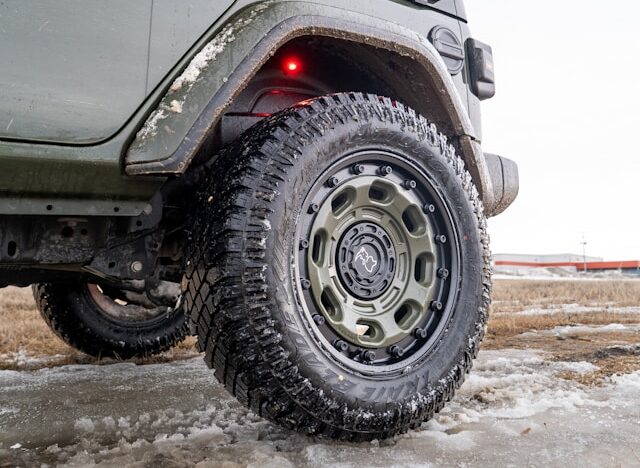
The Quick Answer
No, winter tires are not federally mandatory across all of Canada. The rules completely change depending on where you are driving. Only British Columbia and Quebec have strict laws. Other places highly recommend them or offer insurance discounts.
Since winter tire laws change depending on which province or territory you’re in, it can be pretty confusing to keep track of them all. This post breaks everything down for you from the actual legal requirements and how the tires work, to insurance discounts and what you need to know if you’re just visiting or using a rental car.
Know Your Tires: Interactive Decoder
Before checking the laws in your province, you need to know the difference between a standard tire and a true winter tire. Check the side of your tire and click the symbol you see below.
Mud and Snow (The Bare Minimum)
Don’t let the word “Snow” fool you. These are typically just standard all-season tires. They have slightly wider gaps to push out rain and light slush, but they are not made for freezing Canadian weather.
- ❌ Rubber freezes and gets hard as a rock below 7°C.
- ❌ Dangerous stopping distance on pure ice.
- ✅ Legally accepted as the bare minimum in BC (but not recommended).
The Science of Winter Tires
The Secret is in the Rubber, Not Just the Tread
Tire marketing can be confusing, but the most important thing to know is that tires react to temperature, not just snow.
- The 7°C (45°F) Rule: When temperatures drop below 7°C, standard all-season or summer tires harden like frozen chewing gum. They lose their grip, even on dry pavement.
- Winter Tires: These are made with special, softer rubber (often using silica) that stays flexible in freezing temperatures, allowing the tire to physically grip the microscopic textures of icy roads.
Decoding the Symbols on Your Tires
Governments and manufacturers use two main symbols to classify winter tires. Knowing the difference is crucial:
- M+S (Mud and Snow): Found on most all-season tires. This just means the tread blocks are slightly wider apart. It is not tested for winter performance. The rubber will still freeze and harden below 7°C.
- 3-Peak Mountain Snowflake (3PMSF): The symbol for a true winter tire. It features a snowflake inside a three-peaked mountain. Tires with this symbol have passed rigorous, real-world testing for severe snow and ice. (Note: “All-weather” tires also carry this symbol and are legally recognized as winter tires).
The Physics of Stopping (and the 4WD Myth)
Winter tires drastically reduce the distance it takes to stop your car, which can be the difference between a safe halt and a crash.
- 30% Shorter Stopping Distance: At speeds of 50 km/h, a car with winter tires stops about 30% faster on ice and snow than a car with all-season tires.
- The 4WD/AWD Myth: Having a heavy 4×4 truck or SUV helps you accelerate through deep snow, but it provides absolutely zero help when you hit the brakes. Stopping safely relies entirely on your tires’ grip.
Tread Depth and the “Quarter Test”
Even the best winter tires are useless if they are worn out. The tread features deep grooves to clear slush and microscopic slits (sipes) that bite into the ice.
- The Limits: Winter tires start losing effectiveness when the tread drops below 4.8 mm. In many places, driving on a winter tire with less than 3.5 mm is a ticketable offense.
- The Caribou Quarter Test: You can check your tires at home using a Canadian caribou quarter. Place the coin upside down into the deepest groove of the tire. If you can see the tip of the caribou’s nose, the tread is worn out and the tires need to be replaced.
Provincial Rules Explorer
Select a province or territory from the scrollable menu below to instantly view its specific winter tire mandates, enforced dates, and financial fines or perks.
The Mandate Provinces: Strict Legal Requirements
British Columbia: The “Route-Based” Rule
Because BC has such diverse geography (mild coasts vs. freezing mountain passes), a province-wide rule wouldn’t make sense. Instead, the law applies only to specific roads.
- Where it applies: Specific highways outside of temperate coastal zones (like Northern BC, the Southern Interior, and mountain routes like the Sea-to-Sky Highway). These routes are marked with specific signs.
- The Dates: October 1 to March 31. (Extended to April 30 for extreme mountain passes).
- The Requirements: Tires must have at least 3.5 mm of tread. The law accepts both the M+S and the 3PMSF (Mountain Snowflake) symbols, though officials highly recommend the 3PMSF for real winter safety.
- The Penalty: A $121 fine. Police also have the authority to turn your car around and send you home if your tires aren’t compliant. (Note: Commercial vehicles must carry steel chains).
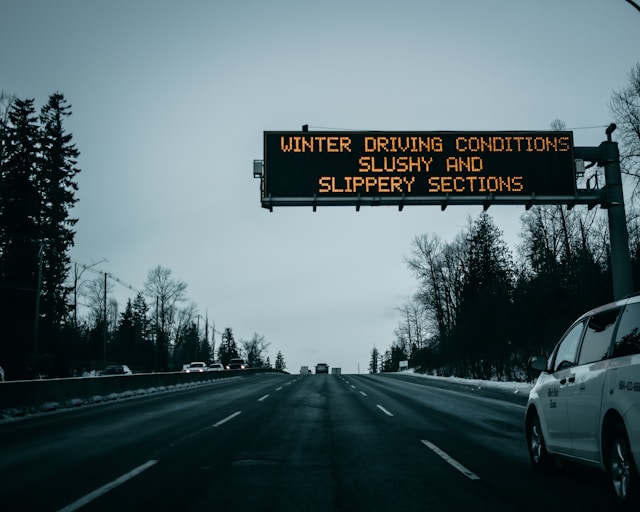
Quebec: The “Universal” Rule
Quebec experiences universally harsh, freezing winters across the entire province, so their law is blanketed across everyone.
- Where it applies: Everywhere in the province. It applies to almost all motorized vehicles registered in Quebec, including cars, taxis, rentals, mopeds, and motorcycles.
- The Dates: December 1 to March 15.
- The Requirements: Tires must have the 3PMSF (Mountain Snowflake) symbol or be studded. Standard all-season tires and basic M+S tires are completely illegal during this time.
- The Penalty: Heavy fines ranging from $200 to $300, plus court costs.
Quebec’s Special 7-Day Exemptions
Quebec knows a rigid law can cause logistical headaches, so they offer special 7-day exemption certificates (up to 4 per vehicle, per season) to allow people to drive without winter tires in specific situations.
- “Snowbirds”: People driving their cars south (like to Florida) for the winter, or returning in the spring.
- Buying/Selling: If you buy a used car in the winter, you get 7 days to drive it to a mechanic for winter tires. (If you buy from a dealership, the bill of sale acts as your automatic 7-day exemption).
- Lease Ends: You are automatically exempt for the final 7 days of a long-term vehicle lease.
- Other Logistics: Moving a car out of storage, returning an out-of-province rental, or transporting cars to auctions. (Note: Heavy farm machinery, transport trailers, and temporary spare tires are permanently exempt).
The Insurance Incentive and Financing Provinces
In areas with vast terrain or aggressive snow-clearing operations, governments often skip strict winter tire mandates. Instead of relying on police enforcement, they offer financial incentives through private auto insurance companies to encourage drivers to make the switch.
Out-of-Province Tourists and Rental Cars
Navigating winter tire laws can be a headache for travelers. A rule that applies to locals might not apply to visitors, and relying on rental agencies to automatically provide the right safety equipment can be a dangerous trap.
Driving in British Columbia: The “Road” Rule
In BC, the mandate applies to the physical road, regardless of where your car is from.
- No Tourist Exemptions: If you drive into BC from Alberta or the US and travel on a mandated mountain route, you must have compliant tires (M+S or 3PMSF). Having out-of-province plates won’t save you from a $121 ticket or being turned around by police.
- The Vancouver Rental Trap: Because Vancouver has a mild climate, it is exempt from the mandate. Therefore, most rental cars at Vancouver Airport (YVR) only come with basic M+S all-season tires. While technically legal to drive to Whistler, they are unsuited for freezing alpine temperatures and can be very dangerous.
- Getting Real Winter Tires: If you want true winter tires (3PMSF) on a Vancouver rental, you usually have to reserve a specific SUV class well in advance and pay a hefty daily surcharge (often $30+ per day).
Driving in Quebec: The “Registration” Rule
Quebec’s law is the exact opposite of BC’s: it is based purely on where the vehicle is registered.
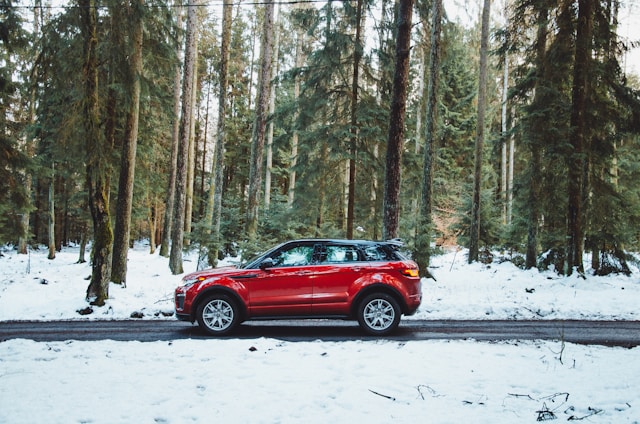
- Visitors are Exempt: If you drive your own car into Quebec with plates from Ontario, New York, or anywhere else, you are legally exempt from the mandate. (However, trying to survive a Quebec winter storm without winter tires is still highly discouraged).
- Quebec Rental Cars: Because the law targets Quebec-registered vehicles, almost all rental cars picked up in the province will have true winter tires (3PMSF) already installed at no extra cost to you.
- The Out-of-Province Rental Trap: Sometimes, rental lots in Montreal end up with cars left behind by one-way travelers from other provinces. Because those cars have out-of-province plates, they are legally exempt and might still have hard, all-season tires. Always check your rental car’s tires for the Mountain Snowflake symbol before driving off the lot!
The Hidden Legal and Insurance Risks of Skipping Winter Tires
Even if you live in a province where winter tires aren’t strictly mandated by law, choosing not to use them can trigger massive legal and financial nightmares if you get into an accident.
Crash Investigations and “Negligence”
After a winter crash, police and insurance adjusters investigate everything including the specific type of tires on your car and their exact tread depth.
- The Negligence Trap: If you crash on snowy roads in places like Ontario or Alberta without winter tires, courts and insurance companies can use that against you. Even if you were perfectly obeying the speed limit, driving on hard all-season tires in a blizzard is often viewed as “negligence” and a failure to prepare for obvious winter hazards.
Shifting the Blame
Having the wrong tires can actually change who is legally responsible for an accident.
- At-Fault Status: There is legal precedent in Canada where drivers were found at-fault for collisions simply because they chose to navigate a storm without winter equipment, while the other driver had prepared properly.
- The Financial Hit: Being found negligent for bad tires can result in your insurance company severely reducing your payout, entirely denying your injury claims, and skyrocketing your future monthly premiums.
The Insurance Fraud Trap
In provinces like Ontario, many drivers explicitly declare they have winter tires to get a mandatory 2% to 5% discount on their auto insurance.
- Voided Coverage: If you take the discount but fail to install the tires (or take them off too early in the spring), it is legally considered insurance fraud.
- Personal Liability: If you have a severe crash in January and the adjuster finds standard summer tires on your car, the insurance company has the right to completely void your coverage. You would be left paying for all vehicle damages and medical bills out of your own pocket.
Final Preparations for Canadian Winter Driving
Canadian winters are notoriously extreme and unpredictable. Whether you are navigating a BC mountain pass, dealing with an Atlantic freeze-thaw, or securing an insurance discount in Ontario, the right preparation is essential.
The Ultimate Winter Safety Checklist
To protect yourself physically, legally, and financially, keep these key points in mind:
- Look for the Snowflake: Always prioritize tires with the 3-Peak Mountain Snowflake (3PMSF) symbol for the best grip in freezing temperatures.
- Check Your Tread: Proactively check your tread depth (remember the Caribou Quarter Test!) to ensure your tires aren’t worn out.
- Beware of Rentals: Don’t blindly trust rental agencies in exempt cities to provide true winter tires. Always check the sidewall before hitting the highway.
- Know the Risks: Understand that driving on hardened summer or all-season tires in a blizzard carries massive physical danger and severe legal liability.
[…] CHECK OUT: Are Winter Tires Mandatory in Canada? The Complete Provincial Guide […]
[…] CHECK OUT – Are Winter Tires Mandatory in Canada? The Complete Provincial Guide […]