

The short answer is yes.
The longer answer? How you get ticketed, and how much it costs you, depends on exactly where you live.
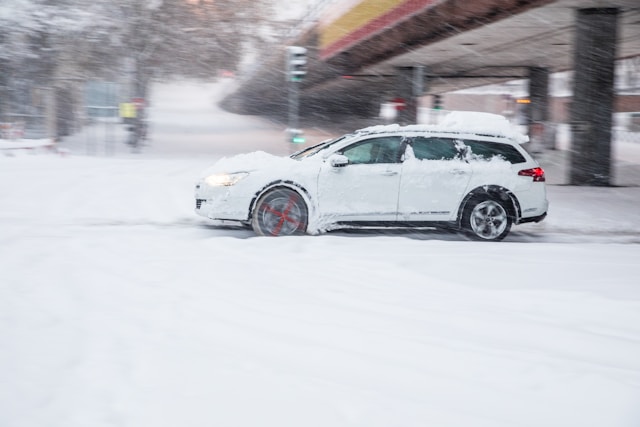
Winter in Canada isn’t a joke. We’ve all seen them. The “mobile igloos” rolling down the highway. It is the driver peering through a little scraped square on their windshield, with a pristine foot deep snowbank smugly sitting atop their SUV.
And besides being hugely annoying and dangerous to the drivers behind them is it actually against the law to drive with snow on your car roof in Canada?
The short answer is yes. The longer version? Where exactly you live, you get ticketed, and how much it costs you.
Here’s what you need to know about snow-clearing laws in Canada.
The Federal vs. Provincial Divide
In Canada, there is no such thing as a “Federal Snow Removal Act.” Traffic laws are a provincial and territorial jurisdiction instead. If a police officer pulls you over for a snowy roof, they don’t need a “snow law” to give you a ticket. They’ll usually charge you with one of three things.
- Driving with a blocked view.
- DRIVING WITH AN UNSECURED/UNSTABLE LOAD
- Driving recklessly.
Here’s a look at the laws, fines and penalties for each province and territory.
Province-by-Province Breakdown
Ontario
Ontario is one of the very few provinces to have actual language that addresses this very problem. Section 181.1 of the Highway Traffic Act specifically penalizes driving with a dangerous accumulation of snow or ice that may fall or slide off.
- Passenger Vehicles: Penalty: $50 to $500.
- Commercial Vehicles: $100 to $1000 fine.
- Other charges: You could also face a $110 fine for a “insecure load” or “obstructed vision.” If ice falling off your roof causes a crash, you could be charged with careless driving, which carries a $2,000 fine, 6 demerit points and possibly a suspension of your driver’s licence.
Quebec
Quebec’s Highway Safety Code is crystal clear on the hazards of winter driving. It is illegal to drive a vehicle which is covered with ice, snow or any matter which can come loose and become a danger to other road users.
- Dangerous snow on roofs: fine of $60-$100 plus administrative costs.
- Obstructed windows/windshield: $100 to $200 fine, plus costs
British Columbia
Deep snow is not something you see often in the Lower Mainland but when you do, police don’t mess around. If you do not clear your roof and windows you will be charged under Section 195(1)(b) of the Motor Vehicle Act for “Driving While View Obstructed”.
- Fine: $109 and 3 penalty points on your license.
Alberta
Alberta has no law about snow on your roof but if that flying snow damages the windshield of the car behind you, the police will be happy to ticket you for an unsecured load or careless driving.
- Reckless driving: $543 fine.
- Commercial: $776 penalty, unsecured cargo.
- General obstructed view: About $155.
Manitoba
In Manitoba, police consider snow and ice flying off a vehicle to be an unsecured load. The province’s Highway Traffic Act states cargo carried by a vehicle must be “contained, covered, immobilized or secured.
- Fine: About $238 for driving with an unsecured load.
Saskatchewan
Saskatchewan, as does Manitoba, considers snow on the roof to be an unsecured load or a visibility issue. And one more biggie: the police in Saskatchewan will give you a $100 ticket for having an obstructed license plate because of snow. Clear the roof but do not forget the plate!
Atlantic Provinces (New Brunswick, Nova Scotia, PEI, Newfoundland and Labrador)
Atlantic Canada sees some of the heaviest snowfalls in the country, but police are used to dealing with the standard Highway Traffic Act rules, not snow-specific laws.
- Usually you will get a ticket for “driving with an obstructed view” or a “insecure load.”
- Penalties usually range between $100 and $250 depending on the province and severity. Newfoundland and Labrador police are very active in warning drivers that if not clearing your roof leads to a collision, it can quickly escalate to major careless driving charges.
The Territories (Yukon, Northwest Territories, Nunavut)
Prepping vehicles up north is second nature, as is surviving winter. The territories may not have snow-removal statutes in their motor vehicle acts, but driving blind, or dropping ice boulders on the road, still contravenes general safety, careless driving and unsecured load regulations. Heavy fines if you cause an accident or endanger the public through your negligence.
Why It Matters (Beyond the Fine)
Yeah, nobody wants a $200 ticket. But the real reason you need to clear your roof boils down to simple road safety.
- The Blindfold Effect: Slam on the brakes at a red light and that heavy slab of roof snow will slide straight forward, instantly covering your entire windshield. Your wipers won’t be able to clean it off and you’ll be driving totally blind into an intersection.
- Ice Missile: When your car gets hot, the ice on the bottom layer of the roof melts. At highway speed, the wind lifts the whole sheet of ice into the air, turning it into a heavy, fast-moving projectile. It can easily smash the windshield of the car behind you.
CHECK OUT – Are Radar Detectors Legal in Canada? The 2026 Provincial Rules
A Few Quick Tips to Do It Right
- Warm it Up. When you leave, run your car for 5 to 10 minutes with the defrost on high. This melts the bottom layer of ice so the roof is easily cleared off.
- Buy a push broom: You can’t use a little hand scraper on taller SUVs and trucks. Get a push broom with a foam head made for vehicles. Enables you to push snow off your roof without marring your paint.
- Clean the lights and plates: Don’t just do the glass and the roof. Clean the headlights, taillights and license plate. A covered plate is a reason for police to pull you over automatically.
Spend two more minutes cleaning out your car. Your wallet, your insurance rates and the drivers around you will all thank you.

[…] CHECK OUT – Is It Illegal to Drive With Snow on Your Car Roof in Canada? […]