

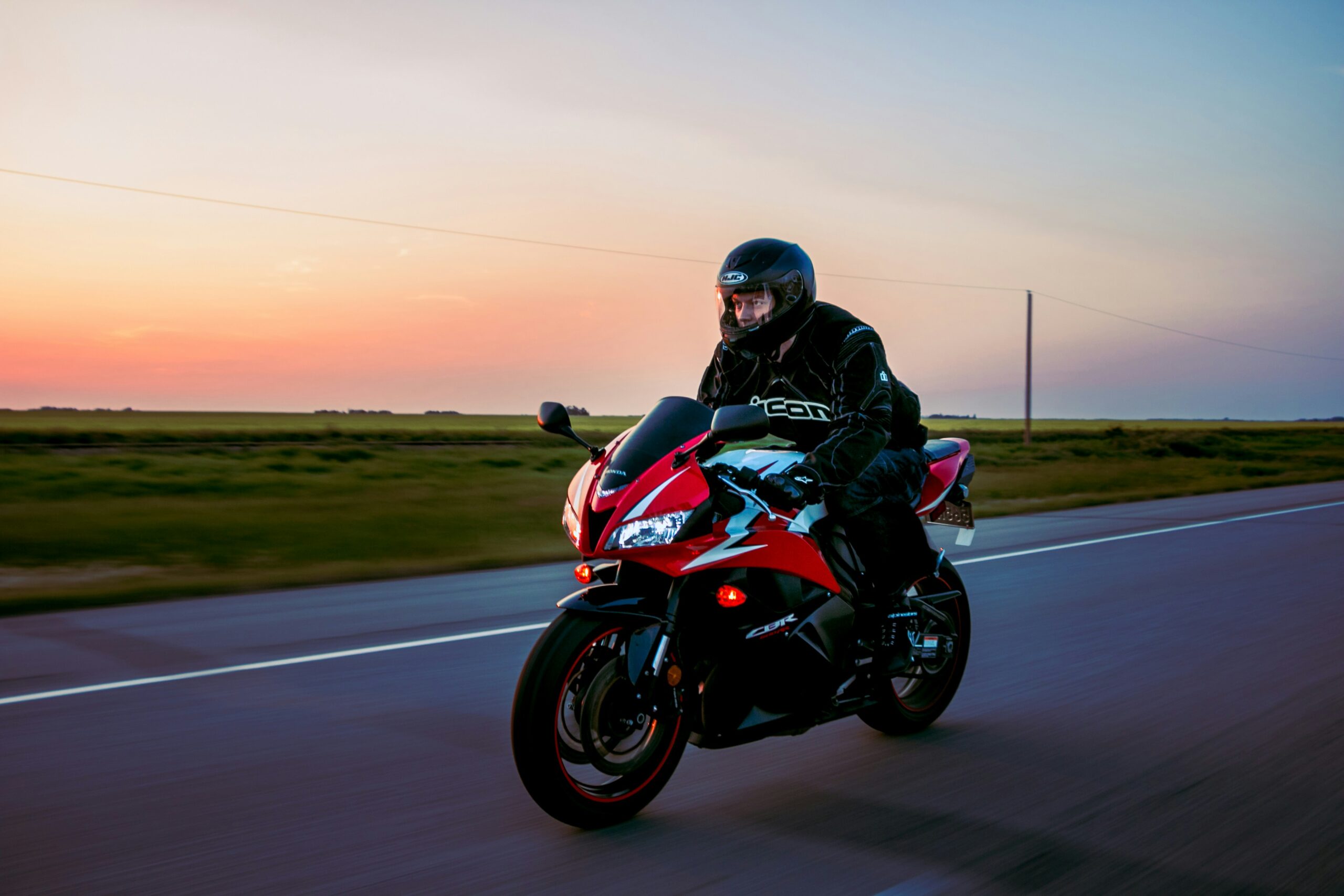
Yes, motorcycles can legally use High Occupancy Vehicle lanes in both British Columbia and Ontario, even with just one rider on board.
Yes, motorcycles can use the High Occupancy Vehicle lanes in British Columbia and Ontario, even if there is only one person on it. If you ride a motorcycle in either of these provinces you have the green light to skip the heavy traffic in the regular lanes and cruise in the HOV lane.
High Occupancy Vehicle lanes ( HOV ) are sometimes marked with a diamond symbol . The goal is to encourage carpooling and ease traffic congestion by moving more people in fewer vehicles . Usually you need at least two, sometimes three, to get in a car. Motorcycles get a special exemption though. Let us see the particular traffic rules in both provinces, and the reasons for this law.
Proper Rules and Laws in British Columbia
British Columbia’s Ministry of Transportation and Infrastructure is responsible for the rules of the road for highway driving. Motorcycles are specifically designated as exempt vehicles for HOV lanes under the provincial Motor Vehicle Act. This means you don’t need a passenger to ride the diamond lane.
These lanes are on major routes including Highway 1 in the Lower Mainland, and Highway 97 in Kelowna. If you are riding in BC, there are some particular rules you need to follow to keep you legal and safe.
Enter and exit properly: You can only enter and exit the HOV lane where the white line is broken. You can be fined for crossing a solid white line to get into the lane.
Look out for bus only lanes: Make sure that you are actually in an HOV lane and not a bus lane. Diamond carpool lanes allow motorcycles, while lanes reserved for transit buses do not. Always look at the overhead signs to confirm.
Proper Rules and Laws in Ontario
Ontario has similar traffic laws, which are very friendly to motorcyclists. The Ministry of Transportation says motorcycles are allowed to use all provincial HOV lanes. They will be found on the major 400-series highways, like Highway 400, 401, 403, 404, 410 and the QEW.
Just like BC, you can’t weave in and out of the lane at will.
Designated lanes: In Ontario, highways have striped buffer zones to separate the HOV lane from regular traffic. You are legally required to wait for the broken white lines indicating entry and exit zones. Jumping the solid line is a guaranteed way to get a ticket and points on your license.
Toll lane awareness: High Occupancy Toll lanes are not the same as standard HOV lanes. If you are in a toll lane area you may still need to follow provincial toll rules, but you can ride through standard HOV lanes.
Why Are Motorcycles Allowed in HOV Lanes?
It may seem unfair to drivers stuck in gridlock but letting motorcycles use the HOV lane makes a lot of sense. The government gives three main reasons for this rule.
Safety of the rider
The most important thing is safety.” Stop-and-go traffic is very dangerous for motorcyclists. Getting rear-ended by an inattentive driver in a car is nothing for another car, but can be deadly for someone on a bike. Keeping motorcycles in motion in the HOV lane keeps them out of the unpredictable stopping patterns of heavy traffic and out of blind spots.
Traffic Movement
Motorcycles just take up a lot less space on the road. Letting them into the HOV lane frees up the regular lanes a bit for cars and trucks. It clears congestion along the entire highway. Every bike you see in the carpool lane is one less car taking up a regular lane.
CHECK OUT – Is It Illegal to Drive With Snow on Your Car Roof in Canada?
Environmental Benefits and Engine Durability
Many older motorcycles and even some modern motorcycles have air-cooled engines. These engines rely on moving forward to push air over the engine block and keep it cool. Overheating of an engine can occur in stop-and-go traffic, leading to breakdowns and stalled vehicles that block regular traffic lanes. By letting bikes continue to roll, we can prevent these roadside breakdowns and lower emissions overall.
Final Thoughts
It is perfectly legal to ride your motorcycle in the HOV lane in British Columbia and Ontario, and highly recommended for your safety. Just remember, the normal traffic laws still apply. You must stay within the speed limit, signal to change lanes and only get on or off the lane where the broken line markings are. Traffic is slow and many drivers get impatient and may take a quick glance and then jump into the carpool lane. Always be alert, keep your distance and enjoy the ride.

[…] CHECK OUT – Can Motorcycles Legally Use the HOV Lane in British Columbia and Ontario? […]